

-200x200.jpg)


-200x200.jpg)




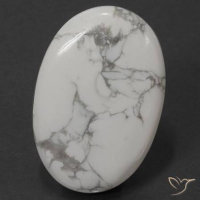
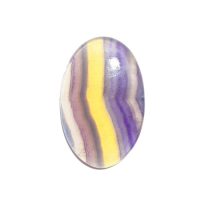
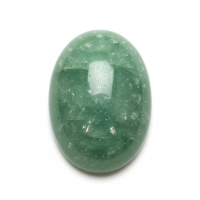
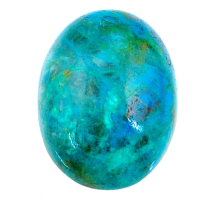
A buyer asks for one ring in five sizes and three stones and assumes that is fifteen separate minimums. Another assumes it is one order and the quantities can be spread anywhere. Both are working from the wrong unit.
The unit is the design. Almost every question about mixing resolves once you know what that word covers — so this guide starts there, then works through what mixing actually means in practice and what the quotation still has to confirm.
The unit that matters
Rings start at 20 pieces per design, with sizes and stones mixable within that design subject to quotation. For comparison, bangles, sets, pendants, earrings, bracelets and necklaces start at 10 pieces per design — rings carry their own figure, and the ten-piece rule is not a general one.
Read that first sentence carefully, because two clauses do a lot of work:
- "per design" — the minimum attaches to the design, not to each size or each stone variant;
- "subject to quotation" — mixing is possible, and the workable combination is confirmed when the design is quoted.
So a single ring design ordered across a spread of sizes and more than one stone is one design meeting one minimum, not a minimum multiplied by every variant.
What counts as one design, and what starts a second
This is where most confusion lives — and it is not something you can settle from a drawing. The quotation is the authority on whether a set of variants is treated as one design or more than one.
What you can do is ask the question precisely. These are the variants worth putting to the quotation explicitly rather than assuming either way:
| Variant you want | Ask in the quotation |
|---|---|
| The same ring across a range of finger sizes | "Is this quoted as one design across the size range?" |
| The same setting with a different stone | "Does swapping to this stone keep it as one design, or does it become a second?" |
| A different finish on the same form | "Is a finish change treated as a variant of this design?" |
| A changed band profile, shank or silhouette | "Is this a variant of the first design or a separate one?" |
Each of those is a question, not a rule — the answer depends on the specific design and is confirmed when it is quoted.
Ask before you plan the order, not after. A short question at brief stage prevents an assortment built on the wrong assumption.
Mixing sizes
Ring sizes are the easiest variable to mix, because a size spread rarely changes how the piece is made. Two things are worth deciding early:
Your size curve. If you already sell rings, use your own sales data — it reflects your actual customers rather than a general assumption. If you do not have that history yet, put a proposed size split in the brief and let it be confirmed at quotation, rather than treating any particular spread as a default.
Which sizing standard you are quoting in. US, UK, EU and other conventions do not align cleanly. Name the standard explicitly in your brief so the sizes you receive are the sizes you meant.
Mixing stones
An order can include multiple designs. Mixed sizes and stones may be possible within a design; the final mix is confirmed in the quotation.
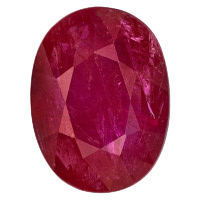
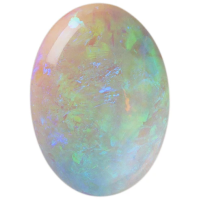
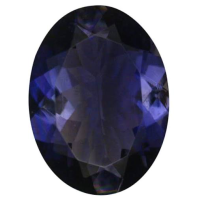
The practical constraint is the setting. A stone swap inside the same setting is generally straightforward when the replacement is comparable in cut and dimension. A stone that sits differently, needs more depth, or requires a different holding method is a production change, and that is the point at which it may become a second design.
Two things to state when you request a mix:
- Which stones, per design — named, not "an assortment";
- Roughly how the quantity splits across them, if the split matters to you commercially.
If the split does not matter, say that too. It is useful information, not a gap.
The rule that catches people out
Per-design minimums apply to each design separately. Quantities cannot be pooled across designs to reach a minimum — ten pieces of one ring and ten of another do not combine into one twenty-piece minimum. They are two designs, and each has to meet its own.
An order can include multiple designs, with each design handled separately and confirmed in the quotation.
Putting it into a quotation request
For each ring design you want quoted:
- the design itself — sketch, reference or CAD;
- the size range and rough quantity per size, with the sizing standard named;
- the stones you want, per design, and how the quantity splits if that matters;
- anything you consider a variant rather than a new design, so the assumption is checked rather than inherited.
Quotations are normally prepared within 24–72 hours after the required design and order details are received. The size curve and stone split are exactly the details that make a brief complete, which is the practical reason to send them together rather than in a second message.
For the full set of minimums, the mold-charge condition and the deposit that starts production, see silver jewelry MOQ, mold charge and production timeline — this article covers only the ring rule and how mixing works inside it.
Where this fits
Browse current ring styles under Rings, or take a design and a size curve straight to the Custom Silver Jewelry Order Process.
Leave a Comment